

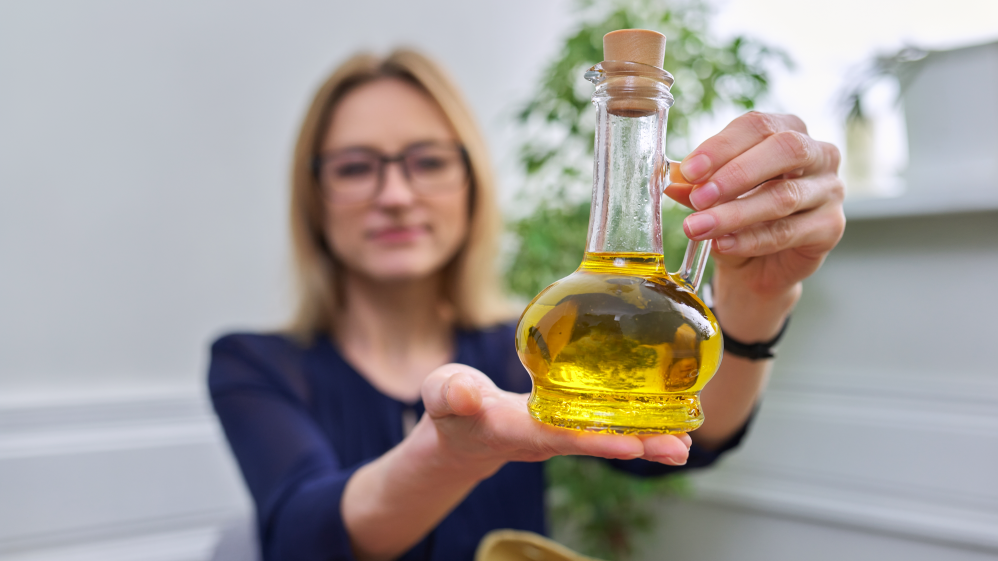
Protect your heart health, improve your blood values, and get essential nutrients with just one spoonful of oil a day. Sounds tempting, right? That's exactly what flaxseed oil promises: It's all the rage and often touted as the "healthiest oil" and a plant-based source of omega-3 fatty acids. But there's more to it than meets the eye.
In this article you will learn what linseed oil can really do, how to use it optimally and whether olive oil is even the better choice for you.
Table of contents
The most important points in brief
Linseed oil is one of the richest plant sources of omega-3 fatty acids (alpha-linolenic acid, ALA).
However, flaxseed oil alone is not sufficient to supply omega-3 fatty acids.
Olive oil is characterized by a high polyphenol content and supports healthy blood lipid levels and normal cholesterol levels.
The combination of both oils can optimally support different aspects of health.
The significance and development of linseed oil
Flax is one of the oldest cultivated plants known to humankind. As early as 8,000 years ago, people in regions of present-day Turkey and Syria were cultivating flax. The plant was versatile: it served both as a food source and for the production of linen, one of the very first textiles.
Over time, people extracted linseed oil from the seeds, which was used not only in cooking but also for paints and wood care. As a binder for oil paints, it made the famous paintings of the Renaissance possible.
Today, linseed oil is once again in the spotlight, primarily due to its potential health benefits. But what can it really do for your health?

What are the effects of regularly consuming flaxseed oil?
Research results show that regular intake of flaxseed oil:
- It can support blood lipid levels and modulate inflammatory processes,
- possibly positively influences cardiovascular parameters
- can exert antioxidant effects and protect cells
- can contribute to the regulation of the immune system,
- positive effects on bone metabolism
- and can affect bone density
This could provide initial indications of neuroprotective effects.
In short, flaxseed oil is a versatile vegetable oil whose composition supports a range of potential health benefits. However, the extent of these effects in everyday life depends on many factors , such as the quality of the oil, storage conditions, overall diet, and individual differences (1).
What makes linseed oil so special?
Flaxseed oil is often highlighted as a plant-based source of omega-3 fatty acids , and for good reason. It consists of up to 70% alpha-linolenic acid (ALA), a polyunsaturated fatty acid from the omega-3 group. This makes flaxseeds one of the most concentrated plant-based sources of omega-3.
In addition to oil, flaxseeds also provide plant-based protein (20–30%) and dietary fiber (up to 28%), which offer further nutritional benefits. Furthermore, flaxseed oil contains valuable bioactive plant compounds such as tocopherols (vitamin E), beta-carotene, phytosterols, and flavonoids. Research is investigating how these components may interact and enhance the oil's health-related properties.
Flaxseed oil stands out not only for its high omega-3 content, but also for its combination of fatty acids, proteins, fiber, and phytochemicals. This composition makes it a special plant oil that can support numerous nutritional aspects, even though the exact mechanisms in the body are still being further researched.

Is flaxseed oil a good source of omega-3 fatty acids?
The hype surrounding flaxseed oil often stems from the fact that it is a plant-based or vegan source of omega-3 fatty acids . The alpha-linolenic acid (ALA) found in flaxseeds is an essential fatty acid. This means your body cannot produce it itself and relies on dietary intake. Omega-3 fatty acids are important building blocks for our cells, brain function, cardiovascular health, and the regulation of inflammation (2).
In the body, ALA can be converted into the long-chain omega-3 fatty acids EPA and DHA. These are active forms that the body can use directly for numerous functions. At first glance, this sounds ideal: You consume flaxseed oil, and your body produces the "ready-made" omega-3s from it.

However, the reality is somewhat different. The conversion of ALA to EPA and DHA is only partially efficient. Studies show that only about 5–10% of ALA is converted into EPA, and for DHA the rate is even lower, below 4%. Theoretically, to obtain 1 g of EPA, you would have to consume around 10 g of pure ALA.
The conversion of ALA to EPA and DHA is also influenced by several factors:
- Omega-6 intake: An unfavorable ratio of omega-6 to omega-3 fatty acids can inhibit conversion.
- Age : The efficiency of conversion can decrease with increasing age.
- Gender : Hormonal differences can influence how well ALA is converted into EPA and DHA.
- Health status : Metabolic disorders or chronic diseases can impair the process.
- Genetic factors : Individual genetic differences determine how efficiently the enzyme systems involved work (3).
What does this mean for you? Flaxseed oil primarily provides ALA and can thus make an important contribution to your omega-3 intake. For direct absorption of EPA and DHA, which are particularly relevant for the brain and nervous system, marine sources such as fatty fish or algae oil are significantly more efficient.
Is linseed oil healthier than olive oil?
As you already know, flaxseed oil can play a valuable role in a balanced diet when used appropriately. However, research on this is still limited, and there is no clear evidence that it is "healthier" than other oils.
This is where olive oil comes into play. In the Mediterranean region, where olive oil is used daily and as a matter of course, people have been considered particularly healthy for decades. This observation has piqued the interest of researchers and brought olive oil into the focus of numerous studies. Its strengths lie less in its omega-3 content and more in entirely different bioactive ingredients.
Typical composition of olive oil:
Oleic acid (Omega-9): 55-83%
Linoleic acid (Omega-6): 3-21%
Palmitic acid (saturated): 7-20%
Alpha-linolenic acid (Omega-3): <1%
Polyphenols as a crucial difference
The particular strength of olive oil lies less in its fatty acid composition than in its content of polyphenols such as hydroxytyrosol, oleocanthal, and oleuropein. These bioactive plant compounds are well-researched and are associated with various health-related effects.
In comparison to flaxseed oil, the scientific data on olive oil is considerably more extensive. Large long-term and population studies on the Mediterranean diet show that a diet rich in olive oil is frequently associated with favorable metabolic and cardiovascular parameters (4).
Even just one tablespoon of olive oil a day can help:
- to protect blood lipids from oxidative stress*
- to maintain normal blood cholesterol levels** (5)
Olive oil polyphenols contribute to the protection of blood lipids from oxidative stress. Valid health claim according to EU Regulation 432/2012 for a daily intake of 10 ml.
Linoleic acid contributes to the maintenance of normal blood cholesterol levels. Valid health claim according to EU Regulation 432/2012 for a daily intake of 10 g of linoleic acid.

Herein lies a crucial difference between olive oil and linseed oil : In the EU, health claims, i.e., health-related statements about food products, may only be used if they have been scientifically reviewed and approved by the European Food Safety Authority (EFSA). This means that there is clear evidence that certain ingredients, such as the polyphenols in olive oil, have specific effects on the body, and the permissible amounts are precisely defined.
While many potential effects of linseed oil are still being researched and therefore must be formulated cautiously, the available research on olive oil allows for a significantly more precise classification.
Linseed oil vs. olive oil: Different strengths, different roles
Both flaxseed oil and olive oil have their own strengths, and this is precisely where their advantage lies when consciously combined. Flaxseed oil scores particularly well with plant-based omega-3 fatty acids (ALA), which can contribute to the supply of essential fatty acids. Olive oil, on the other hand, provides monounsaturated fatty acids and polyphenols, which have an antioxidant effect and support healthy blood lipid levels.
This means that if you're looking for a plant-based source of omega-3 fatty acids, flaxseed oil is ideal. However, if you specifically want to support your heart and blood vessels, olive oil is the better choice. Incorporating both oils into your diet allows you to benefit from the advantages of their respective fatty acid and phytonutrient profiles. This creates a varied and balanced approach that supports the body on multiple levels, without the need to search for a "super oil."
Our recommendation
Linseed oil vs. olive oil: A direct comparison
|
criterion |
Linseed oil |
Olive oil (EVOO) |
| main fatty acid |
Alpha-linolenic acid (Omega-3), >70% |
Oleic acid (Omega-9), 55-83% |
| Special feature | Highest Omega-3 content among plant oils |
Rich in polyphenols |
| Heat resistance |
Not heat resistant, only for cold dishes |
Heat resistant up to 180°C, versatile in its applications |
| Study situation |
Moderate, focused on ALA effect | Very comprehensive (many clinical studies) |
| EU Health Claims |
No |
Available |
| The taste |
Nutty, slightly bitter |
Fruity, peppery (depending on the variety) |
| durability | 2-3 months after opening (refrigerated) |
12-18 months (cool and dark) |

Recognizing healthy linseed oil: Quality & correct application
Flaxseed oil is now available in many varieties, but not every product delivers the valuable nutrients in high quality. With a few clear criteria, you can immediately recognize which flaxseed oil is particularly high-quality and optimally supports your body.
Quality features when buying:
- Organic quality: From controlled organic farming. This ensures you receive the purest possible product, free from pesticides and harmful residues.
- Cold-pressed: Only cold pressing preserves the sensitive omega-3 fatty acids, lignans and vitamins.
- Dark glass bottle: Protects the oil from light, which can destroy the ingredients.
- Current pressing date: Fresh oil contains significantly more Omega-3 than oil that has been stored for a long time.
- Cold chain: Linseed oil is temperature-sensitive. Pre-chilled oil in stores ensures that the quality is maintained at the point of purchase.
Here's how to use linseed oil correctly:
- Do not heat: Flaxseed oil is sensitive to heat. Frying or cooking causes the valuable omega-3 fatty acids to oxidize, and harmful substances can be produced. Therefore, it is best to use flaxseed oil raw.
- Proper storage: Light, heat, and oxygen are the biggest enemies. Store your linseed oil in a cool, dark place and tightly sealed.
- Use fresh: Even unopened, linseed oil usually only keeps for 3–6 months. Once opened, you should use it within 6–8 weeks to preserve its flavor and nutrients.
These tips will ensure that your linseed oil can truly develop its full potential and that you make the best possible use of the valuable nutrients for your health.

Tips for everyday life: Using linseed oil & olive oil in a targeted way
Linseed oil and olive oil fulfill different roles in everyday life. If you use them strategically, they complement each other effectively instead of competing with one another.
| When is linseed oil useful? |
|
| Here's how to use linseed oil in everyday life: |
|
| Recommended quantity: | 1-2 tablespoons daily (10-20 ml) are sufficient to effectively support ALA intake. |
| When is olive oil a good choice? |
|
| Here's how to use olive oil in everyday life: |
|
| Recommended quantity: |
|

Conclusion
Flaxseed oil provides valuable plant-based fatty acids and bioactive ingredients that can be a useful addition to the diet. However, its effectiveness depends heavily on freshness, storage, and correct use, and it does not replace other fat sources.
Olive oil stands out due to its unique composition, rich in monounsaturated fatty acids and well-researched polyphenols, which offer a wide range of benefits in everyday life. Therefore, combining both oils is the most effective strategy for utilizing their diverse nutrient profiles and bringing greater balance and variety to your diet.
What effect does 1 tablespoon of flaxseed oil a day have?
One tablespoon of flaxseed oil (approx. 10 ml) provides ALA, a plant-based omega-3 fatty acid. This can support omega-3 intake and contribute to a balanced diet.
For which diseases is linseed oil good?
Current research suggests the potential of linseed oil for cardiovascular problems, elevated cholesterol, mild inflammatory processes and metabolic issues.
How much flaxseed oil should I consume daily?
1-2 tablespoons (10-20 ml) daily is a practical way to effectively support ALA requirements.
Which linseed oil is the best?
High-quality linseed oil should be organic, cold-pressed, come in a dark glass bottle, have a fresh pressing date, and be stored in a cool place.
Can linseed oil have side effects?
Flaxseed oil is considered safe in moderation. Large amounts can cause digestive problems such as diarrhea or bloating. If you have a blood clotting disorder or are planning surgery, you should consult a doctor before using it.
Is linseed oil suitable for vegans?
Yes, flaxseed oil is a purely plant-based source of Omega-3 and therefore particularly interesting for vegan diets.
How can I further support my Omega-3 intake?
Other plant-based sources of ALA include flaxseed, chia seeds and walnuts; for EPA/DHA, algae oil or fish/fish oil capsules are possible sources.
References for further reading
- Al-Madhagy S, Ashmawy NS, Mamdouh A, Eldahshan OA, Farag MA. A comprehensive review of the health benefits of flaxseed oil in relation to its chemical composition and comparison with other omega-3-rich oils. Eur J Med Res 2023; 28(1):240.
- Shahidi F, Ambigaipalan P. Omega-3 Polyunsaturated Fatty Acids and Their Health Benefits. Annual Review of Food Science and Technology 2018; (9):345–81.
- Haller D, Grune T, Rimbach G, eds. Biofunctionality of food ingredients. Berlin, Heidelberg: Springer Berlin Heidelberg; 2012. (Springer Textbook). Available at: http://nbn-resolving.org/urn:nbn:de:bsz:31-epflicht-1591301.
- George ES, Marshall S, Mayr HL, Trakman GL, Tatucu-Babet OA, Lassemillante A-CM et al. The effect of high-polyphenol extra virgin olive oil on cardiovascular risk factors: A systematic review and meta-analysis. Crit Rev Food Sci Nutr 2019; 59(17):2772–95.
- Scientific Opinion on the substantiation of health claims related to polyphenols in olive and protection of LDL particles from oxidative damage (ID 1333, 1638, 1639, 1696, 2865), maintenance of normal blood HDL cholesterol concentrations (ID 1639), mainte. EFSA Journal 2011; 9(4):2033.

Leave a comment
This site is protected by hCaptcha and the hCaptcha Privacy Policy and Terms of Service apply.