

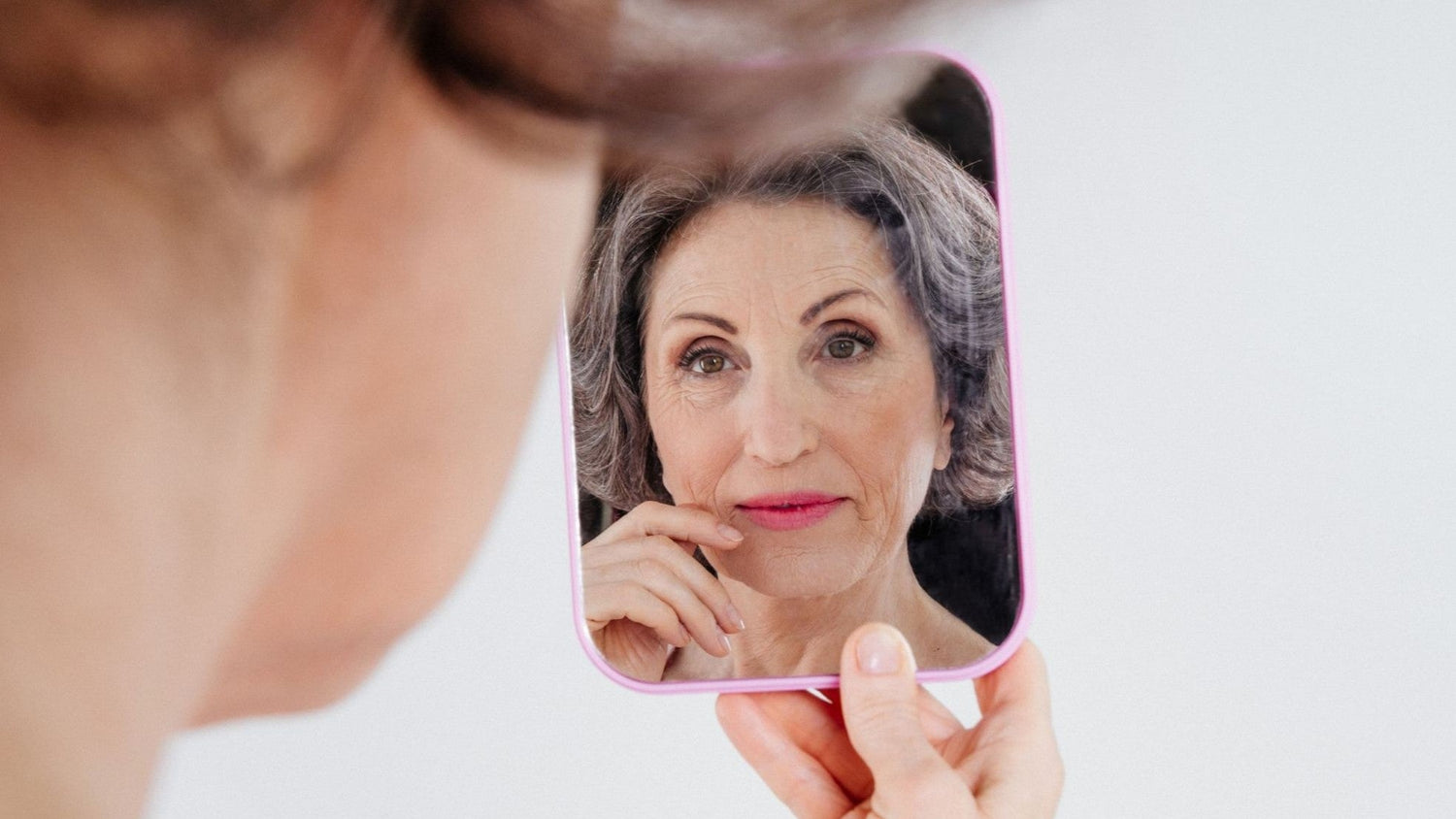
What do you fear most when you think about getting old? Perhaps gray hair, wrinkles, or memory loss. But aging is far more than what we see in the mirror. Deep within our cells, processes are taking place that determine how well we age – the so-called hallmarks of aging, the biological markers of aging.
This article explains which changes are normal with age , what biological mechanisms are behind them, and how you can actively and consciously support the aging process in a positive way.
Here you will learn...
The most important points in brief
The so-called hallmarks of aging describe what happens in our cells as we get older.
Certain factors, such as targeted nutrient intake , can positively influence age-related changes and support cell function in the long term.
The goal is not to stop aging – but to shape it in such a way that health and vitality are maintained for as long as possible.
Physical changes with age: What is normal?
When we think about physical changes as we age, we first think of the visible signs: wrinkles, gray hair, declining eyesight. But behind these external changes lie fascinating, complex processes that take place deep within your cells.
Typical changes and their causes:
- Wrinkles : The skin loses elasticity and moisture – caused by oxidative stress, the breakdown of collagen and altered metabolic processes.
- Hair : It turns gray because the melanocytes (pigment cells) decrease in number. This is due to increasing DNA damage and reduced cell renewal.
- Muscles : Muscle mass decreases while body fat percentage increases – due to reduced protein production and weakened mitochondrial function.
- Bones and joints : Bones become more porous and joints stiffer because bone metabolism slows down and regenerative processes decrease.
- Sensory organs : Hearing and visual acuity decline because cells in the sensory organs regenerate more slowly and become more sensitive to environmental influences.

Psychological changes in old age: Between wisdom and forgetfulness
Psychological changes in old age are also part of the natural process and have their biological causes. Many people notice that they are becoming more forgetful – they no longer remember names immediately, misplace things more often, or forget appointments.
This slight forgetfulness arises because the formation of new nerve cells in the brain decreases, communication between nerve cells becomes slower, and inflammatory processes also become noticeable in the brain.
However, changes that come with age are by no means all disadvantages. Many older people report greater serenity, improved emotional regulation, and increased life satisfaction. So-called crystallized intelligence — that is, knowledge, experience, and judgment—even increases. The brain partially compensates for age-related changes through other strategies and utilizes its knowledge, accumulated over decades, more efficiently.

These age-related changes are completely normal and a natural part of life. They arise from biological mechanisms at the cellular level, which scientists refer to as "hallmarks of aging." While we cannot stop aging, research clearly shows that a conscious lifestyle can slow down and positively influence these processes.
The Hallmarks of Aging: Why We Age
To better understand age-related changes, scientists have defined the so-called "Hallmarks of Aging"—twelve biological markers that characterize the aging process at the cellular level. These were first described in 2013 and supplemented with further mechanisms in 2023 (1).
These characteristics are not isolated processes, but rather interconnected. Some trigger aging, others accelerate it, and still others show the consequences of aging.
Chronic inflammation: The silent driver of aging
One of the most significant changes with age is the increase in chronic inflammation. This phenomenon is also called " inflammaging "—a portmanteau of inflammation and aging. Normally, inflammation is a beneficial response of your body to injury or infection. However, with increasing age, a low-grade inflammation often persists, even when there is no acute cause. This chronic inflammation gradually damages your cells and tissues.
Studies show that chronic inflammation is associated with numerous age-related diseases, including cardiovascular diseases, diabetes, and neurodegenerative disorders.
The good news : You can slow down this process through anti-inflammatory foods and a healthy lifestyle. Omega-3 fatty acids , in particular, have proven to be a promising substance, demonstrably contributing to the maintenance of heart health, brain function, and eyesight (2).

Cell protection and oxidative stress: When free radicals get out of control
Free radicals are produced daily in your body – as a byproduct of metabolism, through stress, environmental toxins, or UV radiation. In normal amounts, they are even beneficial. However, when too many are produced and overwhelm the body's natural defense mechanisms , oxidative stress results.
This oxidative stress damages important cell components such as your DNA, proteins, and cell membranes. As you age, your body loses the ability to effectively repair this damage – one of the key changes of aging.
Dietary antioxidants , such as those found in pomegranate (3) and polyphenol-rich olive oil , can help your body neutralize free radicals and protect cells. High-quality olive oils with a high polyphenol content have been shown to help protect blood lipids from oxidative stress (4).

Telomeres: The biological clock of your cells
Imagine telomeres like the plastic sleeves at the ends of shoelaces – they protect your chromosomes from damage. With each cell division, the telomeres shorten a little. Eventually, they become so short that the cell can no longer divide. It either dies or becomes a so-called senescent cell .
These senescent cells are problematic: although they no longer divide, they remain in the tissue and send out pro-inflammatory signals. This accelerates age-related changes and contributes to the development of diseases.
Telomere shortening is primarily influenced by lifestyle factors: chronic stress, smoking, and lack of exercise accelerate the process, while exercise, a healthy diet, and stress management can protect telomeres. Certain plant compounds, such as spermidine , which occurs naturally in wheat germ , are associated in research with cellular renewal (5) – a process that may be important for cell health and telomere maintenance.



Leave a comment
This site is protected by hCaptcha and the hCaptcha Privacy Policy and Terms of Service apply.